Building a community first NHS with Pip Morrant
From physiotherapist to community minded director
Phillipa Morrant, or Pip as she prefers to be called, qualified as a physiotherapist in 2011 after studying at Keele University.
Entering the workforce at a time of limited vacancies, she spent 18 months on the staff bank before securing a permanent post.
“I liked doing physiotherapy, but I knew early on I wasn’t going to follow the advanced clinical specialist route that my colleagues were taking. I was naturally pulled toward leadership roles.”
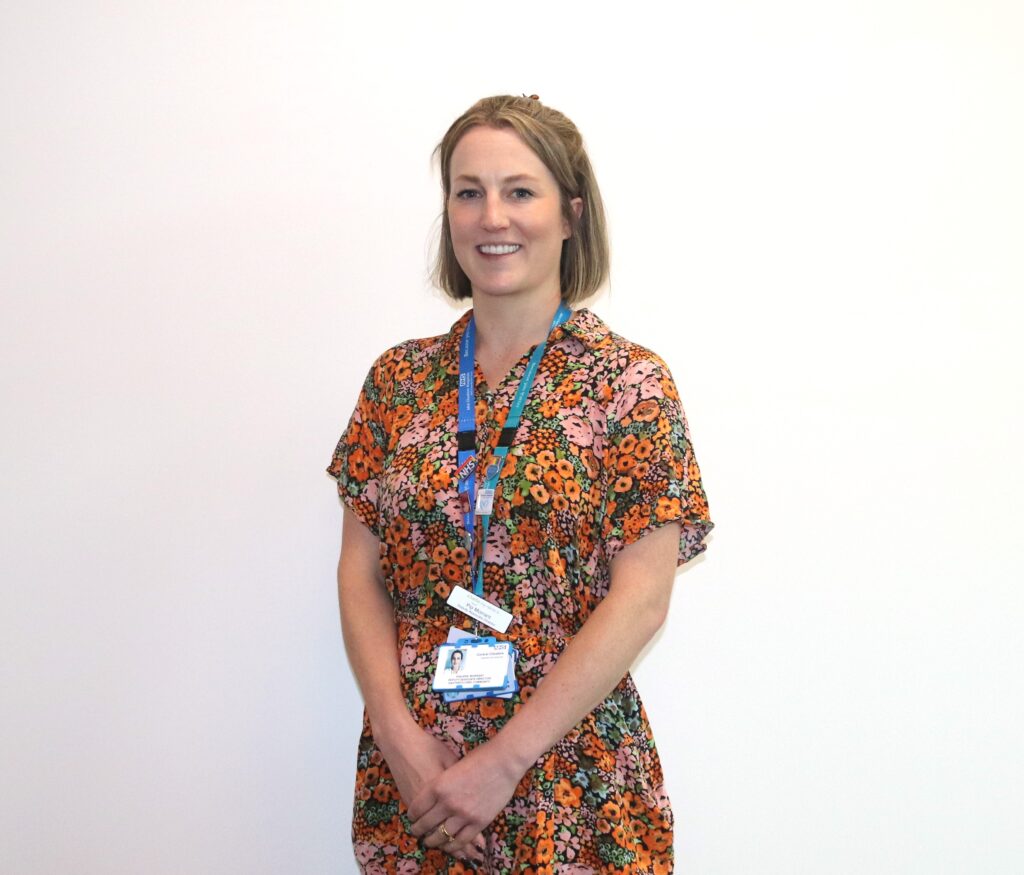
Pip secured a maternity leave cover role as team leader; she also attended university modules on leadership during this posting. Pip’s cover role became permanent and shortly after that, the opportunity to act as therapy lead “accelerated” her path to senior leadership.
She then moved on to become a neighbourhood operational manager for Nantwich and then deputy director for Central Cheshire Integrated Care Partnership (CCICP) the community arm of Mid Cheshire Hospital NHS Foundation Trust.
Alongside these progressions, Pip embarked on the Elizabeth Garrett Anderson (EGA) programme with a Masters (MSc) in Healthcare Leadership a journey that spanned 4 and a half years through COVID and maternity leave.
“I’m really glad I did it (EGA), it’s an excellent programme that I’d highly recommend. It’s a great opportunity to make connections, I actually met one of my colleagues who I now work with through the programme.”
Pip also invested in board readiness. Completing the shadow board programme commissioned by the NHS North West Leadership Academy and delivered by Inspiring Leaders Network.
“It’s a mock board. You’ve got to triangulate data, simulate presenting board papers and responding to challenging questioning. It was really good development.”
Returning from maternity leave, she completed her master’s and within a month was asked to step up.
“My then director went on secondment, and I’ve now been in the Director of Community Services role for three years. I felt then, as has recently been said in the 10-year plan, that community care is where the future is… the right place to deliver services with great outcomes.”
Since CCICP formed in 2016, the organisation has grown from roughly 450 transferred staff to 1,200+ today, developing new services and acquiring contracts like, virtual wards and community IV therapies, mirroring the wider shift to out of hospital care.
Looking ahead, CCICP’s work is tightly connected to the New Hospital Programme for Leighton Hospital.
“It’s not just a new building it’s a new way of working with community front and centre.”
Pip even visited Canada briefly as part of the exploration into future models of care.
Leadership approach and values: autonomy, trust and a culture of improvement
Pip’s leadership is grounded in autonomy and shared vision. Her direct team comprises nine operational managers.
“I thrive on autonomy, and I try to instill that within my team. We regroup every Thursday, to discuss concerns, worries and wins. However, I often I don’t see my team in the day-to-day as we’re spread across 33 sites, so people have to be able to act and lead based on their own instincts. I try to enable that by fostering a culture of trust.”
Over the past two years, CCICP has embedded continuous improvement deeply training senior leaders and operational teams and enabling autonomy at the frontline.
“I’ve deliberately tried to create an environment that allows my team to make sensible decisions without asking for my permission. My approach is alignment through a shared vision, a shared focus and shared priorities.”
This alignment comes through a set of “drivers” that sets CCICP’s top priorities for the year, with each portfolio explicitly mapped to them. For example, on financial sustainability, the continence service team are working on a programme to reach a budget balance by moving to washable products, reviewing products use and models of care, tracked through clear measures rolled up to portfolio performance.
Pip believes this devolved, data literate model has created responsiveness and agility.
“We can mobilise services quickly, switch and change when needed, test and, if it doesn’t work learn and adapt. That tolerance for safe failure is intentional, people feel comfortable trying something new, within the limits of patient safety of course.”
Culture matters. In a recent informal CQC visit, feedback noted a workforce that is passionate, proud and engaged, mirrored by three consecutive years of staff survey results above both national and trust averages.
“We’re not without challenges, some areas are under significant pressure, but our people still feel connected and cared for.”
Pip works across two systems, Cheshire West and Cheshire East, exposed to different partnership cultures, contracting and transformation conversations.
“Both systems are very different, but it’s really insightful working in two systems because you see very different ways of approaching problems, collaborating and pinch points in partnerships.”
“I did my dissertation on system leadership. I learned that relationship building is critical in system working. A big part of my development focus has been on effective relationship building, spending time with people, getting to know them and what drives them.”
“I often deputise for our Director of Strategy and Partnerships, which gives me broader exposure and a chance to observe how different leaders operate in a system environment.”
That observation feeds a core lesson reinforced in coaching: know what you can influence, what you can’t, and how to create traction when you have no line authority.
“Within your own organisation and team, you can instruct. Across systems, you can’t. It’s about relationship, influencing and negotiation.”
Executive coaching with the NHS North West Leadership Academy
A transformative element in Pip’s development is executive coaching, accessed through the NHS NWLA. It began, she says with a “carpark conversation” after an OD session.
“I was discussing with Taira from the ICB (Cheshire & Merseyside) organisational design and talent team about a knotty system engagement issue I was wrestling with. I asked for help, and she kindly connected me into the NHS NWLA Coaching offer.”
The ability to choose a coach from detailed biographies mattered to Pip.
“As a younger female leader, I wanted to be coached by someone who could resonate with that.”
The initial focus was influence in the system. Pip brought a difficult scenario, and used coaching to surface causes, test new approaches and, crucially, hold herself to account between sessions.
“Coaching gave me structured space to act on the uncomfortable stuff, the things you can easily avoid because they’re not the ‘day job.’ The accountability helped and I’ve now got strategies for future situations.”
Executive coaching
The NHS North West Leadership Academy provides access to quality-assured external executive coaches for executive leaders of member organisations.
Executive coaching provides an opportunity to:
- Have dedicated thinking time on personal career journeys or challenges.
- Explore and find solutions to wicked problems.
- Challenge thinking and formulate solutions.
- Increase levels of confidence as a leader.
Email [email protected] if you are interested in accessing executive coaching.
With a few sessions remaining, Pip plans to turn the focus to career exploration, not a fixed plan, but a values based inquiry into what energises her and where she can contribute most.
Pip complemented coaching with a 360° feedback exercise through the NHS North West Leadership Academy’s Deputy and Aspiring Director Development Offer, intentionally priming those that work around her to focus on her system influence.
“I emailed ahead of the invite to ask for feedback to focus on my system influence and my ability to influence especially from external partners, so the insight would be targeted and actionable.”
Looking forward, Pip wants to train formally as a coach.
“I already try to embody a coaching style with my team, but I’d love to deepen the skill.”
She’s also eyeing modules on CV development and interview techniques within her development programme.
“Whilst I don’t have a set position I’m looking to achieve in my career; I am aiming for a board level role. I loved doing shadow board and my favourite days are when I get to cover my executive director. There currently aren’t executive directors for neighbourhoods but if there were I would love to see roles evolve.”
Boundaries, stamina and trust
Pip is unequivocal about work life boundaries and models them.
“Work–life balance is a priority for me; it’s how I’m sustainable. I don’t stay late or work weekends unless I’m on call. If I’m on annual leave, I’m not working – it goes back to trust. I know my team has the capability to do their jobs, I have amazing deputies and if needed, proper escalation processes.”
She views this not as personal preference but as cultural leadership.
“I think we sometimes we over‑check because we don’t trust the baton has really been passed.”
Community leadership
Asked about the future of community leadership, Pip is optimistic but direct about what must change.
“The 10 year plan says shift care from hospital to community and from sickness to prevention. Yet, we’re still mainly being monitored on referral to treatment performance and largely only in acute Hospital Performance. I understand that there is pressure on wait time performance, but in order to make those shifts, we need to move how we measure success, towards population health outcomes. When the focus is on widget counting time, we are not actually making the patient experience any better.”
Pip also believes that the health and care system must have a very tough conversation about resource and evaluate what actually improves health and equity.
“Right now, it still feels like money flows to hospitals. We’ve had no significant investment in core community services since 2016. If we want the 10 year plan to work, we need to invest in communities and trust that making gains in prevention will yield outcomes in acute settings and those hospital fires will start to go out on their own.”
That investment isn’t only cash; it’s skills and tools.
“We use Cipher Health for population health analytics, but the knowledge is concentrated in a few people. We need to generate broader skills in interpreting and acting on the data plus space for evaluation.”
Pip is also watching the genomics agenda that sits “separate for now” but needs to come closer to providers to make sense at the point of care.
One of Pip’s current endeavours is ‘Just Ask’, CCICP’s widespread campaign to normalise reasonable adjustments and tackle health inequalities through everyday practice change.
“We’ve been doing a big training project and campaign called ‘Just Ask’ for 2 years, to get people talking about reasonable adjustments and needs and what that might look like in in service design.”
Optimism for the future of NHS leadership
Pip Morrant represents a wave of leaders who are anchored in community, fluent in systems, and serious about outcomes. Her case study is a look at a devolved, trusting and influential approach to leading the NHS’s new frontier, community leadership.