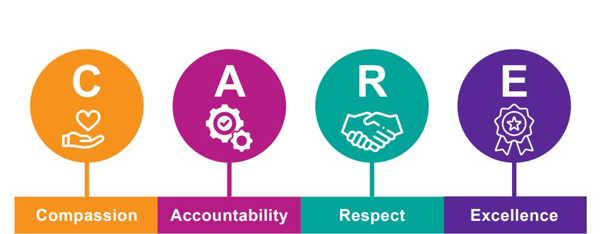
Stockport NHS Foundation Trust (SFT) and Tameside and Glossop Integrated Care NHS Foundation Trust (TGICFT) are working in partnership, sharing leadership, aligning priorities and planning together, while each trust keeps its own identity. The collaboration has a shared identity, the South East Sector Health Care Partnership.
The collaboration has created opportunities to shape how joint working develops. A key stage of this journey was the co-design of shared values across both organisations, which now underpin the values-based leadership approach at the trusts: the C.A.R.E. Leadership Way. This work represents a shift towards embedding shared values-led leadership at all levels of both organisations.
Background
“Thoughtful work had been done to identify shared values across both trusts. From that, a clear message emerged about where we want to focus our leadership. There was a strong sense that this isn’t about working for just any NHS organisation it’s about leadership at Tameside and Glossop and Stockport.And crucially, what does that really mean? Where do we want our leaders to be focusing their attention?”
Kate Rowland, Head of Talent, Leadership and Organisational Development Consultancy
What is the C.A.R.E. Leadership Way?
The “C.A.R.E. Leadership Way” is an overarching leadership approach that guides leaders across both trusts. It is built around a shared leadership commitment:
“We lead with compassionate accountability, creating an environment of respect and inclusion, to deliver excellence in our services and meet our vision as a trust.”
The approach is underpinned by 3 principles:
Coaching: Embedding a coaching mindset and principles to empower staff and encourage an open and transparent culture.
Inclusion: Championing inclusive practices and proactively bringing missing voices into decision-making.
Emotional Intelligence: Recognising and managing emotions and responding empathetically to others.
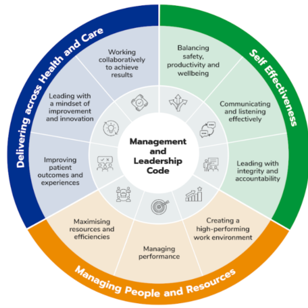
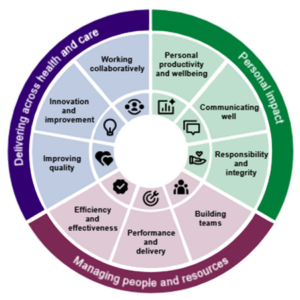
“When we were first developing the leadership approach, back in April 2025, we were working with the very early iterations of the national Leadership and Management Framework. We wanted to make sure we were taking that into account. Since then, there have been some refinements, for example, more recently we’ve emphasised elements like curiosity, which weren’t expressed in quite the same way in the initial version. We are clear that the approach needs to evolve with what we need as a healthcare partnership, and in line with national guidance.
We also had conversations with Suzanne from the NHS North West Leadership Academy to bring in a broader North West and beyond perspective. In addition, we spoke with other local trusts to cross-reference our thinking.
Internally, we tested our approach widely. We took it, in different forms, to a range of leadership forums and meetings.”
Kate Rowland, Head of Talent, Leadership and Organisational Development Consultancy
Early management and leadership framework code of practice
Current Leadership and Management Framework standards
Senior system lead support
Senior system leads are dedicated representatives who support member organisations across the North West systems. Acting as allies and trusted partners, they provide a listening ear and help shape tailored development offers and interventions. With expertise in commissioning, senior system leads connect organisations to high-quality leadership development providers. They also have in-depth knowledge of the NHS North West Leadership Academy’s membership offer and support the integration of these resources into internal development strategies.
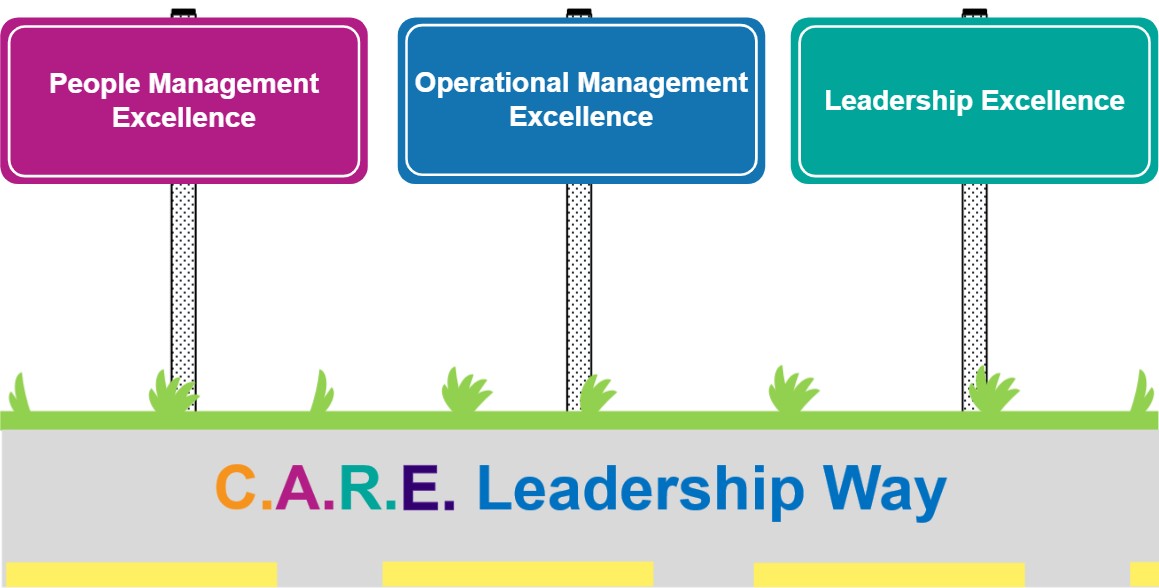
The C.A.R.E. Leadership Way recognises the professional diversity and range of leadership and management roles and development needs across the staff population. Leaders and managers identify their priority development needs, based on 3 key strands of excellence:
People Management Excellence: Focused on the day-to-day ‘moments that matter’ with colleagues, equipping leaders to manage individuals and teams effectively.
Operational Management Excellence: Focused on developing the capabilities needed to manage operations with confidence, sound governance and accountability.
Leadership Excellence: Focused on creating accountable, compassionate, and visionary leadership that enables innovation, collaboration, influencing, and relationships building.
Leadership Excellence
The “Leadership Excellence” strand of the C.A.R.E Leadership Way contains a range of interventions connecting the trusts’ internal development offer and regional and national opportunities:
Peer learning opportunities
Peer learning to foster collaboration, share learning and troubleshoot. Opportunities include: learning circles, peer coaching, mentoring, and communities of practice.
Internalleadership programmes
A targeted senior leadership programme, with senior leadership events aligned to current trust leadership priorities with a strong emphasis on fostering connections and enhancing collaboration.
Coaching and mentoring
The trusts are one of the first to introduce a designated Coaching and Mentoring Hub on the North West Leadership Academy platform, where staff can access both internal and external coaches and mentors. The Hub also offers internal coaches and mentors access to CPD, supervision and networking.
Collaborative masterclasses and podcasts
Internal masterclasses aligned with current trust leadership priorities as well as access to the North-West Collaborative Masterclass series and Leadership Live podcast.
NHS leadership programmes
Signposting to national NHS leadership programmes through the NHS Leadership Academy.
360-degree feedback
Access to the Healthcare Leadership Model self-assessment, enabling leaders to assess their behaviours and identify development needs.
This blended model creates a continuous learning environment and supports leadership development at scale.
Joint board development
To support the South East Sector Health Care Partnership, a new joint board brings leaders from both trusts together. They make decisions collaboratively, ensure clear governance and oversee the improvements the collaboration will deliver. The NHS North West Leadership Academy is providing support for this integrated board, including supporting the commissioning of Sharon Amesu, a leadership consultant and multi-award-winning professional speaker, to help design and deliver a bespoke joint board development journey.
This development journey has begun with a strong focus on engagement, working alongside joint board members to understand their current context, strengths, aspirations, and opportunities for development.
The next stage will be to explore the characteristics and behaviours of high-performing boards, using these insights to co-create a tailored programme that builds on the strengths and foundations of both organisations and develops the board to think, lead and take responsibility at the scale and complexity now required.
Board development
The NHS North West Leadership Academy (NHS NWLA) offers its members board development, providing funding and access to a framework of vetted, quality-assured facilitators.
Expert facilitation has proven to be particularly helpful to members and stakeholders where issues are complex or disputed, where perspectives and interests are many and diverse, and where a high degree of inventiveness, harmony and collaboration are required.
NHS NWLA expert facilitators work closely with boards to scope their specific requirements, design innovative and creative solutions that are engaging and impactful, and contribute to a post-delivery review.
Please email [email protected] to explore board development opportunities.
Leading with Impact Programme
One element of the Leadership Excellence strand is the “Leading with Impact Programme“, for senior and mid-level managers across the partnership.
This cohort programme includes 5 day-long modules, facilitated psychometric feedback, facilitated 360 feedback through the national HLM 360 feedback tool and opportunities for coaching, either internally or externally.
Leading with Impact Programme logo
There is real emphasis on the value of peer learning:
“We recognise that cohort-based programmes create a unique opportunity for peer support, which is something we’re really trying to build. It’s about enabling people to support one another, to learn from each other and lean on that network.
We’re actively championing this approach. At the moment, it’s been fairly informal, but we’re starting to put more structure around it. For example, we’ve set up an alumni group on MS Teams for Leading with Impact. This gives people a simple way to reach out, ask for support, and stay connected.
More broadly, it’s about creating a safe space where people can have open conversations and realise there are others at the same level facing similar challenges, and experiences.”
Vicky Wardle, Talent, Leadership and OD coordinator
Another key feature of the Leading with ImpactProgramme is an end-of-programme presentation designed to encourage leaders and managers to embed the learning across many different pockets of the organisation.
“We ask participants to apply their learning and share it through a storytelling element as part of a celebration event.This has proved to be really powerful. It helps bring the cohort closer together, as people are talking more openly about their people management skills.”
James Smithyes, Talent and Leadership Development Manager
The Leading with Impact Programme is already delivering results for both the organisation and participants:
Sadie McMaster
Sadie McMaster works at Stockport NHS Foundation Trust in the microbiology department, in 2026 she joined the Leading with Impact Programme. She used skills and knowledge learned in the programme to overcome change management challenges in a laboratory information management system (LIMS) changeover project. “One of the most valuable aspects of Leading with Impact was learning alongside leaders from across the organisation. The relationships, shared learning and support network have continued beyond the programme and given me confidence that I’m not facing leadership challenges alone.”
Since completing the programme, Sadie has received a promotion in April 2026 from technical head of microbiology to interim pathology operational lead (Stockport).
Developing future global majority heritage leadership: Elevate with C.A.R.E. Programme
In January 2025, Stockport NHS Foundation Trust and Tameside and Glossop Integrated Care NHS Foundation Trust launched applications for the Elevate with C.A.R.E. Programme to address representation and progression gaps in leadership within both organisations.
19 colleagues in bands 5-6 from a global majority heritage background were successful in securing a place on the programme, a blended plan of learning designed to build confidence, visibility, and readiness for career development, focused around real, lived experiences and providing peer learning opportunities. The programme focuses on:
Empowered, inclusive leadership: Recognising and harnessing lived experience and voice.
Collaborative leadership and peer learning: Building strong cross‑trust networks through cohort learning, including learning circles.
Career progression and visibility: Shaping development plans and strengthening participants’ profiles across both trusts.
Leading with our values in mind: All programme activities and coaching is aligned to the C.A.R.E. Leadership Way.
The programme design is a blended learning model, which will enable the trusts to evaluate which learning elements have had the most significant impact, to enable evidence-based recommendations for development interventions that can be scaled and embedded across both organisations.
Welcome webinar
To start the programme, participants completed a welcome webinar, attended alongside their managers, followed by a half-day workshop.
The welcome webinar provided an opportunity to congratulate participants for their success in getting on the programme through a competitive application process. It covered the learner journey and set expectations for the participants and their line managers (opportunity, space and encouragement).
100% of participants found this useful. One participant commented:
“I think it was important managers were invited, so they could support us to achieve our goals”.
Opening workshop
The workshop focused on equity, lived experience and leadership identity; ambition, mindset and inclusive leadership behaviours; challenging imposter feelings and stepping into stretch; visibility, networks and mentoring; and preparing for the learning circles.
Participant feedback demonstrated a very high level of satisfaction with the session – an average of 4.92/5 across relevance, pace, and engagement. The themes from the feedback were that the workshop was motivating, empowering and engaging, with a high level of interactivity. The elements that resonated most were: recognising imposter syndrome, confidence and visibility, networking and peer connection.
Career coaching sessions
Between March and April, all participants then had a 1-hour career coaching conversation with the Talent and Organisational Development Practitioner.
These person-centred career coaching conversations were shaped by participants’ self-identified areas of focus. Participants were supported to explore enablers to overcome barriers and were signposted to relevant resources and information. In addition, the C.A.R.E Leadership Way offer was explored, aligned to each participant’s current role, level, and career aspirations. This highlighted the breadth of development opportunities, networks, and resources available to support their ongoing progression and effective navigation of organisational systems.
100% of participants reported that the career coaching conversation was useful. Feedback highlighted that the conversations were effective in building confidence, increasing self-awareness, and supporting participants to take a more proactive approach to their career development.
A key theme was the enhanced confidence to step outside of comfort zones, with participants recognising the value of taking calculated risks and challenging themselves to progress.
Many reported gaining greater clarity around available opportunities and next steps, including exploring roles, engaging with colleagues in aspirational positions, and actively seeking mentorship.
The importance of coaching and mentoring relationships was strongly emphasised, with several participants taking tangible actions such as applying for coaching support or reaching out to potential mentors.
One participant commented that the coaching “was instrumental in me taking the step to contact my new line manager to negotiate terms of working, feeling reassured that my current team will be happy for me to take a new job that aligns with my career goals.”
Though tailored to individuals, the career coaching conversations revealed consistent themes in the barriers to progression:
Lack of confidence (42%): Participants reported challenges in recognising their own strengths, putting themselves forward for opportunities, and navigating unfamiliar or challenging situations.
Cultural differences in communication (21%): Participants noted that differences in communication styles and workplace expectations could impact confidence, self-expression, and engagement with opportunities. This suggests a need for continued focus on inclusive communication and support to navigate organisational norms. Interview skills (16%): Participants identified this as a development need and highlighted the need for greater support in preparing for interviews, including building confidence in presenting their skills and experiences effectively and understanding expectations within recruitment processes.
Peer learning circles
The next stage of the programme was three peer learning circles, in April, May and June:
Learning Circle One:Awareness → Reflection → Shared understanding The first learning circle, led by the expert facilitator, provided a confidential, supportive space for peer reflection, with light structure to guide discussion. Participants explored practical support such as coaching and mentoring, and were introduced to organisational “enablers” (structural, relational, cultural) to better understand progression. They identified small, achievable actions (e.g. finding a mentor or initiating a development conversation) and were offered reflective prompts and a self-belief challenge to take practical, confidence-building steps between sessions.
95% of participants strongly agreed they were engaged throughout the learning circle (the other participant indicated agree). They also confirmed the pace and relevance of the learning circle was right for them – particularly important given the baseline findings highlighting confidence and system navigation as key gaps. Participants described the session as interactive, motivating, and empowering and a “channel to speak and not be scared”, underlining the psychological safety created to enable honest reflection. When asked what they found most useful, a consistent theme was shared experiences and peer learning, with comments such as:
“Interaction and shared experiences” “Learnt from other people’s experience” “Good to know what others are experiencing”
Discussions around mentoring were also highlighted as particularly impactful, with participants recognising the importance of seeking support and building networks to enable progression.
One of the most significant outcomes from the learning circle was the clear intention to apply learning in practice, including: Seeking out mentoring and coaching relationships, increasing visibility within their roles, applying for development opportunities, courses, and projects, having proactive conversations with managers about progression, and challenging themselves to step outside of their comfort zones
There was evidence of a shift in mindset, with participants recognising that confidence is built through action, rather than waiting until they feel fully prepared.
Learning Circle Two:Application → Action → Ownership of development The second learning circle again created a confidential, peer-led space for participants to reflect, share and learn together. Building on the first session, this was more like a traditional learning circle, with a stronger emphasis on participant-led discussion and small group conversations to support open and honest exploration. Participants reflected on the actions they had taken since the first learning circle, sharing what they had tried and noticed in relation to confidence, visibility and progression. Through structured group exercises, participants worked collaboratively to identify practical enablers that could help address common barriers, reframing challenges as opportunities for action and access. The session also encouraged individuals to recognise their existing strengths, reinforcing confidence and self-belief. The session again concluded with participants identifying one specific, realistic commitment to take forward, supported by ongoing reflection and a continued focus on confidence-building, visibility and engagement with opportunities.
100% of participants strongly agreed they were engaged throughout the learning circle, building on the strong foundation established in the first learning circle and maintaining high levels of energy, focus and participation. Participants particularly valued the opportunity to explore challenges collaboratively, describing the session as “a space to speak, learn and share”, with feedback highlighting the value of “group sessions about challenges”, “discussing the challenges with colleagues and getting practical help which they themselves had tried”, “listening to other people’s stories” and “peer support through shared experience”.
This session marked a shift from shared reflection towards peer-supported problem solving, with participants actively working together to identify solutions.
The session created structured opportunities for participants to reflect on actions taken between sessions, and all participants shared actions they had taken towards their career goals. Examples included: Applying for roles and exploring career opportunities, seeking mentorship and strengthening professional relationships, increasing visibility within their roles, engaging more proactively with leadership opportunities, embedding learning into everyday practice
Feedback highlighted shifts such as “being more confident in communicating at work”, “putting myself out there”, and maintaining motivation and discipline in pursuing goals. This suggests the programme is helping to enable more proactive, confident behaviours.
Learning Circle Three:Confidence → Increased action → Career and leadership shifts The third learning circle provided participants with an opportunity to reflect on the progress they had made since joining the programme and consider how increased confidence, visibility and self-belief could support future development and progression. Building on the themes explored in the previous sessions, participants reflected on personal growth, shared experiences and considered the practical steps they could take to continue their development journey. Again, a key feature of the session was peer learning and shared reflection, before the learning circle concluded with participants identifying actions to support their continued growth.
100% of respondents rated the learning activities as relevant, and all rated engagement and pace as either 4 or 5 out of 5, achieving an overall average score of 4.9 out of 5 across all evaluation measures. Feedback highlighted the value of “sharing experiences“, “insights shared by colleagues on how they are managing challenges themselves” and “reflecting on progress made so far“.
The most significant outcome reported was an increase in confidence, with 10 of the 13 respondents specifically identifying confidence as the biggest shift since joining the programme. Participants described feeling more confident to speak up, contribute in meetings, challenge imposter syndrome and pursue progression opportunities. Importantly, this increase in confidence is translating into action:
Closing workshop
The programme closed with a half-day workshop, which opened with a leadership conversation with Karen James, Chief Executive of the Trusts. The workshop focused on helping participants reflect on their 6-month leadership journey, recognise their growth in confidence, visibility and leadership identity, and celebrate the strengths developed through their lived experience.
Participant feedback again demonstrated a very high level of satisfaction with the closing workshop, achieving an overall average score of 4.8/5 across relevance, pace and engagement measures. Participants described the workshop as inspiring, motivating and empowering, valuing the opportunity to reflect on their leadership journey, recognise their growth, and identify practical next steps for continued development. A particularly impactful element was the leadership conversation with Karen James, which participants highlighted as insightful and motivating. Feedback also again emphasised the value of peer interaction, shared reflection and celebrating achievements together. “The most useful part of the closing workshop was the opportunity to reflect on my own leadership journey, recognise my strengths, and identify areas for further growth. It helped shift my mindset, build confidence, and encouraged me to step outside my comfort zone into my stretch zone.” “I found the interaction with the Chief Executive particularly inspiring, as it gave us the opportunity to hear about their leadership journey, ask questions, and gain practical advice from their experience.”
Haider Javid
The Elevate with C.A.R.E Programme has been co-designed with Haider Javid, a leadership and inclusion specialist with over 24 years of experience in the public sector, currently leading inclusive talent management at Manchester City Council. Haider’s services were made available to Stockport NHS Foundation Trust and Tameside and Glossop Integrated Care NHS Foundation Trust through the NHS North West Leadership Academy’s commissioning frameworks.
“As we moved into the commissioning process, Suzanne provided really valuable support; she helped us narrow things down effectively. We had three quite different providers, all thoughtfully selected, which gave us the space to properly explore our options and clarify what we were looking for.
We ultimately chose Haider; his approach stood out as he focused on understanding where people are, their level of readiness, and their accountability. That really mattered to us.
We put participants through a challenging recruitment process, so they came in learner-ready. It was important that this was matched by a programme that would stretch and challenge them, and that’s exactly what he’s doing.
Since then, we’ve continued to benefit from regular touchpoints with Suzanne through monthly catch-ups. Those sessions give us a chance to sense-check how things are going; a kind of ‘critical friend’ space where we can talk things through and reflect on progress.”
Kate Rowland, Head of Talent, Leadership and Organisational Development Consultancy
Impact of the programme
Participant outcomes
3
have started new roles
7
have applied for a new role
1
has applied to be a RISE network chair
1
has become a health and wellbeing champion
1
has been part of an interview panel
2
have completed Professional Nurse Advocate Training
1
has completed Cancer Ambassador training
1
has become a health and wellbeing champion
2
have applied for an apprenticeship
1
have undertaken additional training
At the end of the Programme, a baseline survey that participants had completed in the first workshop was repeated.
Across the six-month programme, participants reported increased confidence across every measure assessed. The most significant shifts are:
decision-making and taking the lead (+1.43)
navigating organisational systems and opportunities (+1.36)
inclusive leadership (+1.17)
recognising their own leadership potential (+1.11).
This is particularly significant because the two largest improvements, decision-making/taking the lead and system navigation, were also the two lowest-confidence areas at baseline. Leadership potential, which was the third-lowest area at baseline, also increased substantially
Organisational opportunities
A key aim for the programme was to get evidenced-based recommendations for future leadership development interventions supporting global majority colleagues (and potentially staff with other protected characteristics) that can be scaled and embedded across the organisation.
Some insights have already led to changes while the programme was underway, and other actions are highlighted below:
Mentoring and coaching
Actions taken: The organisation has introduced a designated Coaching and Mentoring Hub on the Northwest Leadership Academy platform, where our staff can access both internal and external coaches and mentors.
Coaching resource hubs have been developed and are being promoted across both organisations (articles in weekly communications, links on the intranet home pages, news announcements on the intranets and through the C.A.R.E. Leadership Way news).
SFT has introduced a mentoring resource hub, including a focus on informal mentoring. This is being reviewed to see whether it should be extended to TGICFT.
Taking a coaching approach underpins the C.A.R.E. Leadership Way, and coaching prompts are built through the Let’s Talk toolkit to increase the informal coaching approach taken by managers.
Opportunities to develop a coaching approach have been built into the “Ongoing learning” element of the People Management: Moments that Matter wheel and into the New Leaders and Managers Welcome Kit.
Under consideration: The Race Assembly and NHS Employers are intending to roll out an inclusive mentoring programme from winter 2026. The organisation intends to get involved in this programme, depending on the details (not yet available).
System navigation including the organisational offer, interview skills and recruitment information
Actions taken: The Talent & Organisational Development Practitioner curated a set of resources from the Recruitment Team, the Talent and Organisational Development Team and national resources to guide participants. These have been shared with participants, alongside planning a short supplementary webinar for Elevate participants to address key questions about the recruitment process and preparing for interviews.
Continued promotion of the C.A.R.E. Leadership Way offer, through Team Brief, divisional emails, news announcements, weekly comms.
Links to the organisational development offer have been put into the Let’s Talk appraisal templates, to make signposting as easy as possible during line manager and appraisee conversations.
Under consideration:
Opportunity to collate the career resources into a central hub, e.g. as part of the Learning and Education hub.
Line manager engagement in career development
Actions taken:
Sharpened focus on career and development conversations in Let’s Talk appraisals for the 2026 cascade, with coaching prompts, updated training, and short video refreshers for managers.
Development of a 6-minute video resource as part of the People Management Moments that Matter series to support managers in creating an environment of ongoing learning.
Peer networks and visible role models
Actions taken: Toolkit to lead and shape learning circles has been developed and shared as part of the C.A.R.E. Leadership Way: People Management Excellence.
Under consideration: Opportunities to formalise into ongoing communities of practice/learning networks for global majority staff.
The positive response to Karen James’s (CEO) involvement at the closing workshop reinforced the value of visible senior sponsorship. The suggestion of dedicated “Journey to Leadership” sessions featuring leaders from underrepresented backgrounds is being taken to the Race Network. These sessions would be delivered in a conversational format, providing participants the opportunity to hear first-hand accounts of leadership journeys, including challenges, setbacks, key career decisions and lessons learned along the way. Beyond sharing practical advice and guidance, such sessions would provide visible and relatable role models, reinforcing that progression is achievable.
Building confidence and visibility
Actions taken: Increased focus on examples of development/stretch opportunities that might be undertaken as part of appraisal conversations, e.g. participation in recruitment panels, attendance at senior leadership meetings, involvement in service improvement initiatives, shadowing opportunities and participation in staff networks or organisational projects.
Imposter Syndrome: Developing a healthy self-view Webinar from the Wellbeing Collective actively promoted through the C.A.R.E. Leadership Way.
Under consideration: Broadcast sessions of the elements of the empowerment workshops that focused on imposter syndrome and confidence building, to allow a broader audience of global majority colleagues to access this learning.
Meet the Elevate with C.A.R.E. participants
Rohan Rajan Jacob
Organisation: Stockport NHS Foundation Trust
Job title: Registered nurse and nurse team leader
My ambition: I am committed to further developing in critical care leadership, with a strong interest in service improvement and in building resilient, well-supported nursing teams that deliver excellent patient care even in the most challenging situations. My skills: I balance hands-on critical care with leading and supporting my team through complex, high-pressure shifts, being present at the bedside while coordinating care, supporting clinical decision-making, and helping maintain a safe, smooth flow across the unit. A big part of my role is supporting others, especially junior staff and preceptees, helping them build confidence, develop strong clinical judgement, and feel supported as they grow. I am particularly passionate about maintaining high standards in infection prevention and ANTT, consistently advocating for safe, consistent practice, and I bring compassion, teamwork, and the ability to stay steady under pressure to my work.
Princess Offih
Organisation: Stockport NHS Foundation Trust
Job title: Midwife My ambition: I am working towards stepping into senior leadership roles where I can lead service improvement, influence policy and practice, and contribute to reducing health inequalities within maternity care. I want to grow as a leader who is authentic and values-led, grounded in integrity and a clear sense of purpose, while having the courage to speak up, challenge constructively, and advocate for meaningful change. My skills: My key strengths include clinical leadership in complex and high-pressure environments, quality improvement through audit and service development, and building effective relationships across multidisciplinary teams. My leadership is grounded in a strong commitment to equity and culturally responsive care, and I draw on my lived experience to shape a more inclusive, compassionate, and reflective approach to care and leadership, with a focus on influencing change and creating environments where patients and staff feel seen, heard, and respected.
My experience on the Elevate with C.A.R.E. Programme: I am currently developing my leadership skills in increasing my visibility and confidence in senior spaces, strengthening my operational decision-making, and navigating systems to influence meaningful change. I am working towards stepping into senior leadership roles where I can lead service improvement, influence policy and practice, and contribute to reducing health inequalities within maternity care.
Yasmin Tayabali Hakimuddin
Organisation: Stockport NHS Foundation Trust
Job title: Health visitor
My ambition: I aspire to progress into senior leadership roles where I can champion equality, shape compassionate cultures, support workforce wellbeing, and empower others to reach their full potential. I want to grow into a leader who is approachable, emotionally intelligent, courageous, and authentic; someone who leads with integrity, creates psychologically safe environments, and inspires others through empathy, encouragement, and genuine human connection.
My skills: My career has been rooted in advocacy, relationship-building, and delivering person-centred care that supports both families and colleagues to feel heard, valued, and empowered. My leadership is grounded in compassion, kindness, equality, and authenticity, with a strong focus on staff wellbeing, psychological safety, positive team culture, and improving experiences for those we care for. I have contributed to service development, supported team engagement initiatives, mentored students, and developed my ability to influence positive change through coaching, self-awareness, and compassionate leadership practice.
My experience on the Elevate with C.A.R.E. Programme: Through coaching sessions and self-development opportunities, I have developed greater self-awareness and insight into my leadership style and values. As part of the Elevate leadership programme, I am continuing to strengthen my skills in speaking up, influencing positive change, advocating for wellbeing, and leading with courage and compassion. I hope this experience will continue to shape my confidence and ability to influence meaningful and lasting improvements across services.
Nancy Sirma
Organisation: Tameside and Glossop Integrated Care NHS Foundation Trust
Job title: Registered nurse
My ambition: I am developing my leadership skills in speaking up, decision-making, and navigating healthcare systems, and I am working towards taking on greater leadership responsibilities, contributing to service improvement, and stepping into opportunities that influence positive change in patient care. I want to grow as a leader who is compassionate, confident, collaborative, and committed to empowering others while promoting excellence in patient care.
My skills: I am passionate about compassionate leadership, patient-centred care, and creating supportive team environments, with a strong focus on improving patient experiences and strengthening team culture. My key strengths include communication, teamwork, and resilience, and I draw on my lived experience of working in diverse healthcare environments and supporting patients with complex needs to shape a compassionate and collaborative approach to care and leadership.
Lino Kanjiranilkunnathil
Organisation: Tameside and Glossop Integrated Care NHS Foundation Trust
Job title: Neonatal nurse (NICU)
My ambition: I aspire to grow as a leader who is authentic, courageous, and empowering – someone who inspires others, advocates for both patients and staff, and drives sustainable improvements in care. My goal is to contribute at a strategic level, aligning frontline insight with organisational vision, and ultimately shaping a culture where excellence, equity, and compassion are at the heart of everything we do.
I am passionate about creating impact where it matters most – improving patient and family experiences, championing equity in care, and fostering a positive, inclusive team culture. I believe that outstanding neonatal care extends beyond clinical outcomes; it is about how families feel supported, how teams collaborate, and how environments enable both patients and staff to thrive.
My skills: My key strengths include compassionate leadership, effective decision making under pressure, and the ability to build trust within multidisciplinary teams. I draw on my lived experience of working across diverse, high-pressure healthcare environments to shape a leadership approach that is both people-centred and outcome-focused, ensuring every voice is heard and every decision is made with integrity and purpose.
My experience on the Elevate with C.A.R.E. Programme: As I continue to grow, I am actively developing my leadership skills in visibility, speaking up, confident decision-making, and navigating complex healthcare systems. I am working towards stepping into more senior leadership roles, leading impactful projects, and embracing stretch opportunities that allow me to influence change at a wider organisational level.
Minu Chacko
Organisation: Stockport NHS Foundation Trust
Job title: Charge nurse
My ambition: I am committed to progressing in my nursing career by seeking opportunities to take on senior roles and step into stretch assignments that develop my leadership skills and support service enhancement and patient-centred care. I am committed to growing as a nursing leader by supporting my team, leading initiatives that improve patient care, and acquiring the skills needed for greater leadership responsibilities.
My skills: I am passionate about leadership focused on patient-centred care, effective communication, team empowerment, and professional development, guided by the values of compassion, integrity, and accountability, with a focus on enhancing patient safety and advocating for evidence-based practices to ensure the highest quality of care. My key strengths include compassion, empathy, communication, critical thinking, and decision-making, and I am strengthening my leadership skills by improving clinical focus, increasing professional visibility within the team, and contributing to collaborative decision-making to enhance patient outcomes.
Jayarani Haridas
Organisation: Stockport NHS Foundation Trust
Job title: Staff nurse
My ambition: I am developing my leadership skills in clinical decision-making, speaking up for patient safety, and supporting staff development, and I am working towards progressing into a Band 6 leadership role where I can lead teams, contribute to service improvement, and support high standards of care within the NHS. I want to grow as a leader who is supportive and approachable to colleagues and patients, committed to patient safety and quality improvement, confident in leading and supporting teams, and dedicated to mentoring and developing future nurses.
My skills: I am passionate about improving patient outcomes, supporting colleagues, and contributing to a positive and safe team culture within healthcare settings. My key strengths include effective communication, leadership, and teaching, and I draw on my lived experience of working in diverse clinical environments across India and the UK to shape patient-centred care, collaborative teamwork, and continuous improvement in clinical practice.
Jitendra Singh Parmar
Organisation: Tameside and Glossop Integrated Care NHS Foundation Trust
Job title: Interim ward manager My ambition: I am actively developing my leadership skills, expanding my confidence in areas such as team management, decision-making, and service improvement. I am working towards becoming a strong, effective ward leader capable of taking on senior leadership responsibilities and contributing to wider organisational priorities, and I aspire to be supportive and approachable, fair and consistent, confident in decision-making, and focused on developing teams and improving patient care. My skills: I am passionate about supportive, visible, and compassionate leadership, and about creating a safe, positive, and patient‑centred culture for both staff and patients within the stroke unit. My key strengths include being resilient, having good communication skills, and maintaining a calm, constructive approach during challenges, and I draw on my lived experience of working across busy, high‑pressure departments to shape how I support staff, prioritise safety, and improve patient outcomes.
Isra Yaseen
Organisation: Stockport NHS Foundation Trust
Job title: Quality assurance technical officer My ambition: I am developing my leadership skills in speaking up, increasing professional visibility, and contributing to decision‑making within quality and healthcare systems. I am working towards taking on greater responsibilities, leading improvement projects, and progressing into more senior quality roles within healthcare, and I want to grow as a leader who is inclusive and supportive, confident in decision‑making in complex quality environments, and committed to continuous improvement and patient safety. My skills: I have a strong background in microbiology, pharmaceutical sciences, and quality systems, with experience across pharmaceutical manufacturing, laboratory testing, and healthcare environments. My key strengths include quality management and compliance, microbiological expertise, and problem-solving through investigation and root cause analysis, and I draw on my lived experience of working across different healthcare and pharmaceutical environments internationally to shape a collaborative and quality‑focused approach to improving systems and processes.
Ammara Javaid
Organisation: Stockport NHS Foundation Trust
Job title: Safeguarding school nurse
My ambition: I am developing my leadership skills in visibility, speaking up, and decision-making, and I am working towards holding a senior role within nurse education. I want to grow as a leader who is knowledgeable, supportive and can lead on implementing change that will improve the quality of nurse education.
My skills: I am passionate about learning and education within nursing, improving the learning experiences of student nurses and the workforce, ensuring nurse education is engaging and purposeful that builds a passionate, conscientious, competent and skilled current and future workforce. My key strengths include being resilient and reliable, empathetic, and effective communication, and I draw on my lived experience of over 11 years as a school nurse to shape my understanding of the needs and challenges of young learners.
Ekaete Utuk
Organisation: Tameside and Glossop Integrated Care NHS Foundation Trust
Job title: Energy and waste compliance officer
My ambition: I am developing my leadership skills in authenticity, resilience, strategic and visionary thinking, storytelling and purposeful influence, and I am working towards taking on senior roles and leading strategic projects and programmes. I want to grow as a leader who builds strong relationships, empowers people, models the trust’s values (compassion, accountability, respect and excellence) and influences others to also model the trust values. My skills: I am passionate about clear communication and transparency, creating positive change through collaboration, people development, driving continuous improvements to reduce costs and environmental impacts, promoting sustainable waste management across multidisciplinary teams, and embedding sustainability in organisational culture towards achieving the trust’s net zero agenda. My key strengths include effective communication, problem-solving, and proactiveness, and I draw on my lived experience of cultural intelligence, intellectual curiosity, discipline and systems thinking, empathy and minority identity to shape my objectives of building trust across multidisciplinary teams, influencing and leading teams through change management, making decisions guided by data-driven insights, leading inclusively and with empathy, and encouraging open dialogue about challenges.
Christabel Fole-Nwosu
Organisation: Tameside and Glossop Integrated Care NHS Foundation Trust
Job title: Staff nurse
My ambition: I am committed to continuously developing my communication and leadership skills, and I actively contribute to projects that enhance patient care and service improvement within the department. I aspire to grow into an approachable and influential leader, someone who listens, advocates for both patients and staff, and plays an active role in shaping high-quality, sustainable care through ongoing professional development.
My skills: I am passionate about delivering holistic, person-centred care and championing compassionate, inclusive leadership that creates a supportive and psychologically safe culture for teams to thrive. My strengths lie in effective communication, collaborative working, and driving clinical improvement, and I draw on my experience in emergency care to deliver responsive, inclusive care while supporting colleagues to perform at their best under pressure.
Anesu Beshen Rosebud Mwashita
Organisation: Stockport NHS Foundation Trust
Job title: Staff rurse
My ambition: My career aspiration is to progress into a Band 6 deputy sister/charge nurse position. In this role, I aim to lead shifts with assurance, formally mentor and develop junior staff, initiate and champion quality improvement projects, and apply my advanced clinical knowledge to directly enhance patient outcomes and overall team performance.
My skills: I am a highly motivated and experienced Band 5 registered nurse with over 12 years of dedicated service, currently based on Ward E3 (DMOP). My practice is fundamentally driven by a deep commitment to patient safety, the professional development of my colleagues, and the consistent delivery of compassionate, person-centred care. My core clinical strengths are in effectively prioritising complex workloads, providing proactive support to team members, and ensuring seamless care coordination throughout my shifts. I am adept at managing dynamic ward environments while maintaining high standards of safety and patient dignity. I am actively developing my leadership capabilities, with a focused emphasis on confident clinical decision-making and the appropriate escalation of care, and I place great importance on cultivating a supportive, positive, and collaborative team atmosphere where every member feels valued and empowered.
Lilian Eze
Organisation: Tameside and Glossop Integrated Care NHS Foundation Trust
Job title: Clinical research practitioner
My ambition: I am actively developing my leadership skills, particularly in communication, compassionate leadership, and effective decision-making as I work toward stepping into a senior role where I can make a meaningful impact and empower those around me. My aspiration is to grow into a leader who is compassionate, inclusive, and fair, creating an environment where everyone feels valued and supported.
My skills: I am deeply passionate about people and their wellbeing, and I am motivated by helping individuals feel empowered to reach their full potential. My strengths lie in compassion, empathy, and problem-solving, and I draw on my lived experience of supporting others, offering guidance, and being present when they need someone to help them progress toward their goals.
Leading for collaboration
The C.A.R.E. Leadership Way is a core stage of the journey of two NHS organisations coming together to build a shared culture, grounded in common values and a collective commitment from their leadership community. Beginning with alignment around what matters most, leaders across both trusts have worked to shape a consistent way of behaving and leading, while respecting the identity of both organisations.
Through this ongoing journey, a connected leadership community is emerging, one that actively lives and reinforces a shared culture. It is this foundation that enables the two organisations to deliver truly collaborative, consistent and meaningful care for their patients and service users.
For more information about the C.A.R.E. Leadership Way, contact: [email protected]