From hospital to community: Insight from ‘This Van Can’ cancer awareness initiative
By Mingxi Suo, NHS North West Leadership Academy
What can happen when a public health campaign moves into community spaces and meets people where they are?
Launched by Greater Manchester Cancer Alliance, This Van Can has been touring across the region, bringing conversations about cancer symptoms and screening into local markets, town centres and even sports events. Since launch, around 200 roadshows have taken place across all ten boroughs, sparking over 30,000 meaningful conversations as of April 7, 2026.
Joining us in Leadership Live, Alison Jones, Director of Cancer Commissioning and Early Diagnosis at the Greater Manchester Cancer Alliance, shares that This Van Can started as a response to a national call for projects reaching people at high risk of prostate cancer. The model has since grown into roadshows with different focuses, from prostate cancer to bowel cancer, ovarian cancer and heartburn health checks.
Getting behind the strategy
Patient involvement has been central right from the design stage. The team took the national need to people who’d actually been through a cancer pathway and asked them to help shape the response.
Ambassadors with lived experience of cancer are also on the ground during van visits, actively starting conversations with the public.
“I think their enthusiasm and their real desire to take what they’d experienced out to people like them was just infectious and that was such a positive part of the project from the very, very beginning.”
Alison Jones, Director of Cancer Commissioning and Early Diagnosis, Greater Manchester Cancer Alliance
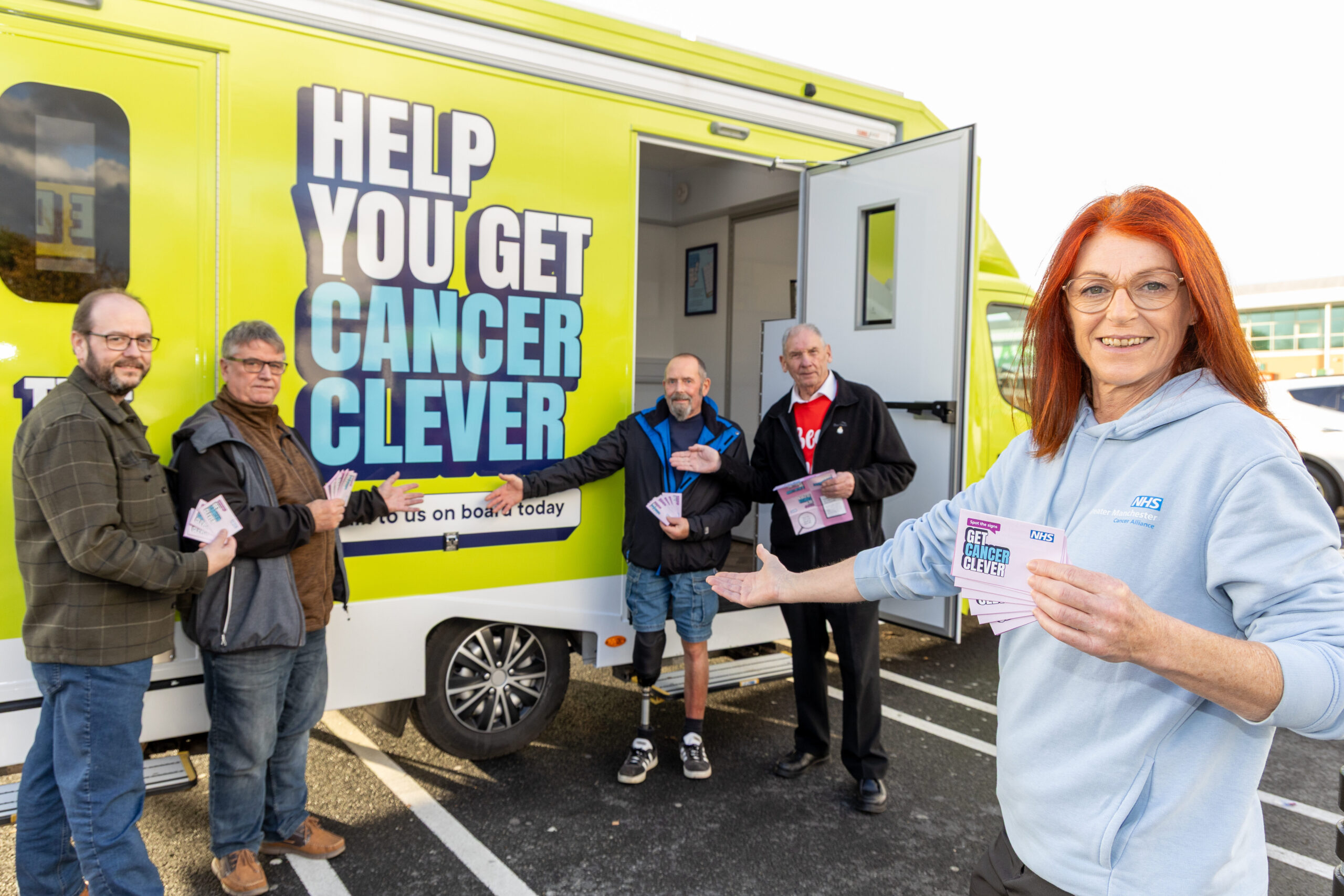
Rather than stock images, the photos and design on each van are chosen to feel relatable. The prostate van uses real local faces and experiences, while the bowel van uses bold, cartoon-like illustrations to catch attention without making light of a serious subject.
Deciding where the vans should go, the team has identified where late-stage diagnosis is an issue on a hyperlocal level, then tailored messaging to its demographic. This data-led approach has helped address health inequalities rather than assume a one-size-fits-all model. And the ovarian cancer van was a great example: Relevant data suggests the need to visit some of the affluent parts in Greater Manchester, contrary to the common belief that outreach should typically take place in the deprived areas.
Mobilising the whole system
None of this happens in isolation. Long-standing relationships with the voluntary sector have been crucial, including national charities like Target Ovarian Cancer and Heartburn Cancer UK. Primary care has played just as significant a role, with a dedicated cancer lead in each one of Greater Manchester’s 65 PCNs who has helped develop and deliver the initiative in their local area.
Social media has been fundamental in maximising engagement for the roadshows, especially with partner amplifications. Recognising very few people follow the Cancer Alliance account, the team has collaborated with influential local voices, such as GP surgeries, businesses and local authorities, to share information about the van visits through their channels.
Local sports clubs have also contributed to the initiative’s success, reaching audiences who might never otherwise engage. This includes a van visit to the Etihad Stadium on a football match day, and Wigan Warriors Rugby League Club promoting the initiative through match programmes and other platforms.
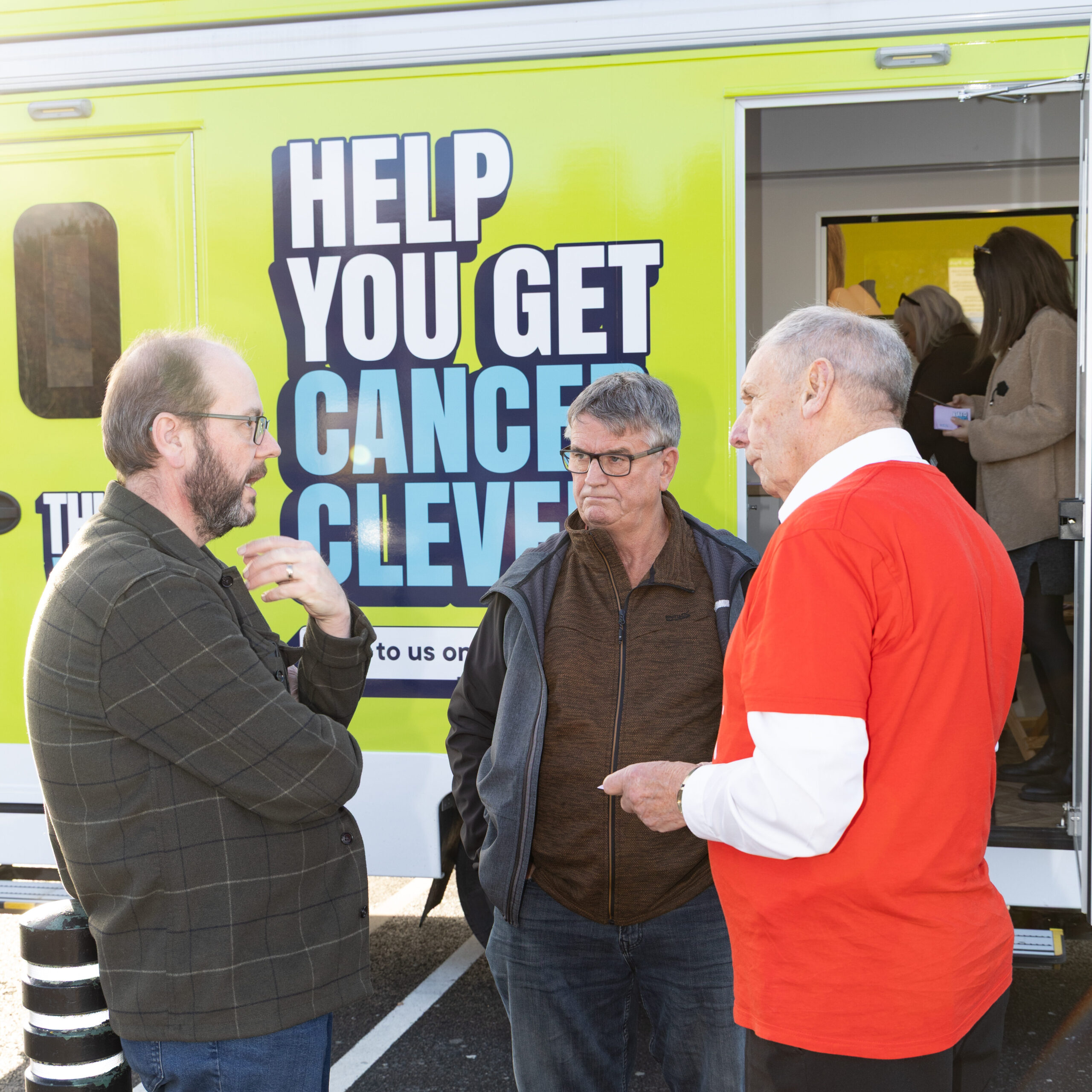
“I did a couple of shifts, one of them that was at the Etihad on match day. I thought ‘well no men are going to want to talk to a load of women about cancer signs and symptoms when they’re there to watch a football match’. But it was incredible, the number of conversations, the level of interest.”
Alison Jones, Director of Cancer Commissioning and Early Diagnosis, Greater Manchester Cancer Alliance
Mobilising the whole system
This Van Can has demonstrated how national priorities can come to life locally when there’s a shared vision and effort. It also offers food for thought for anyone leading the three shifts in the 10 Year Health Plan…
- Hospital to community, by taking conversations into supermarkets, town centres and sports grounds, rather than waiting for people to come to health services.
- Sickness to prevention, by promoting screening uptake and HPV vaccination alongside symptom awareness.
- Analogue to digital, by using QR codes and online resources alongside face-to-face conversations.
As roadshows around specific cancers come to an end, the van has evolved to focus on the generic signs and symptoms of cancer. Carrying the “Get Cancer Clever” messaging, it is expected to run until March 2027.
To hear more about the story of This Van Can, listen to the full episode of Leadership Live below. If you’re looking to have genuine resident involvement to enhance neighbourhood working, explore our Citizen Leadership Toolkit to get started.